



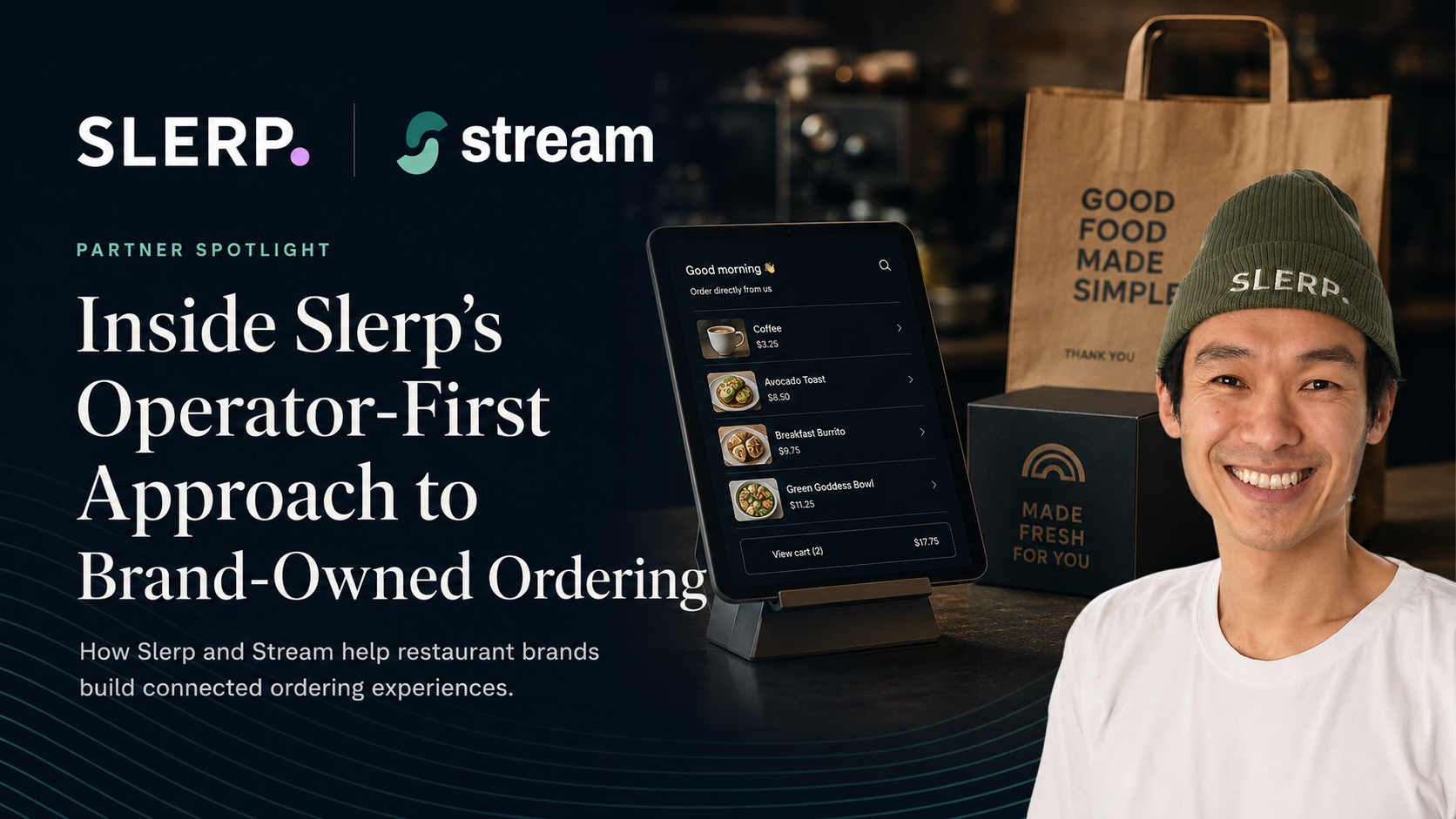
“I never intended to start a technology company. I just wanted to solve a real structural dependency that was clearly unfolding in front of me.”
Slerp was born from a real operator problem.
Before becoming a technology company, founder JP Then was building Crosstown, the London bakery brand best known for its sourdough doughnuts. As digital ordering, delivery, and marketplace demand began reshaping hospitality, JP saw firsthand that restaurants needed more than a retail-style e-commerce tool. They needed a platform built specifically for hospitality: direct ordering, time-based menus, click and collect, pre-orders, fulfilment logic, delivery, loyalty, CRM, and brand control all working together.
We sat down with JP to talk about the story behind Slerp, how brand-owned ordering has evolved, why direct and marketplace channels can work side by side, and how Stream helps power the POS connectivity layer behind Slerp’s growing restaurant ecosystem.
Slerp has become a trusted platform for brands looking to own their digital ordering and guest experience. What inspired the creation of Slerp?
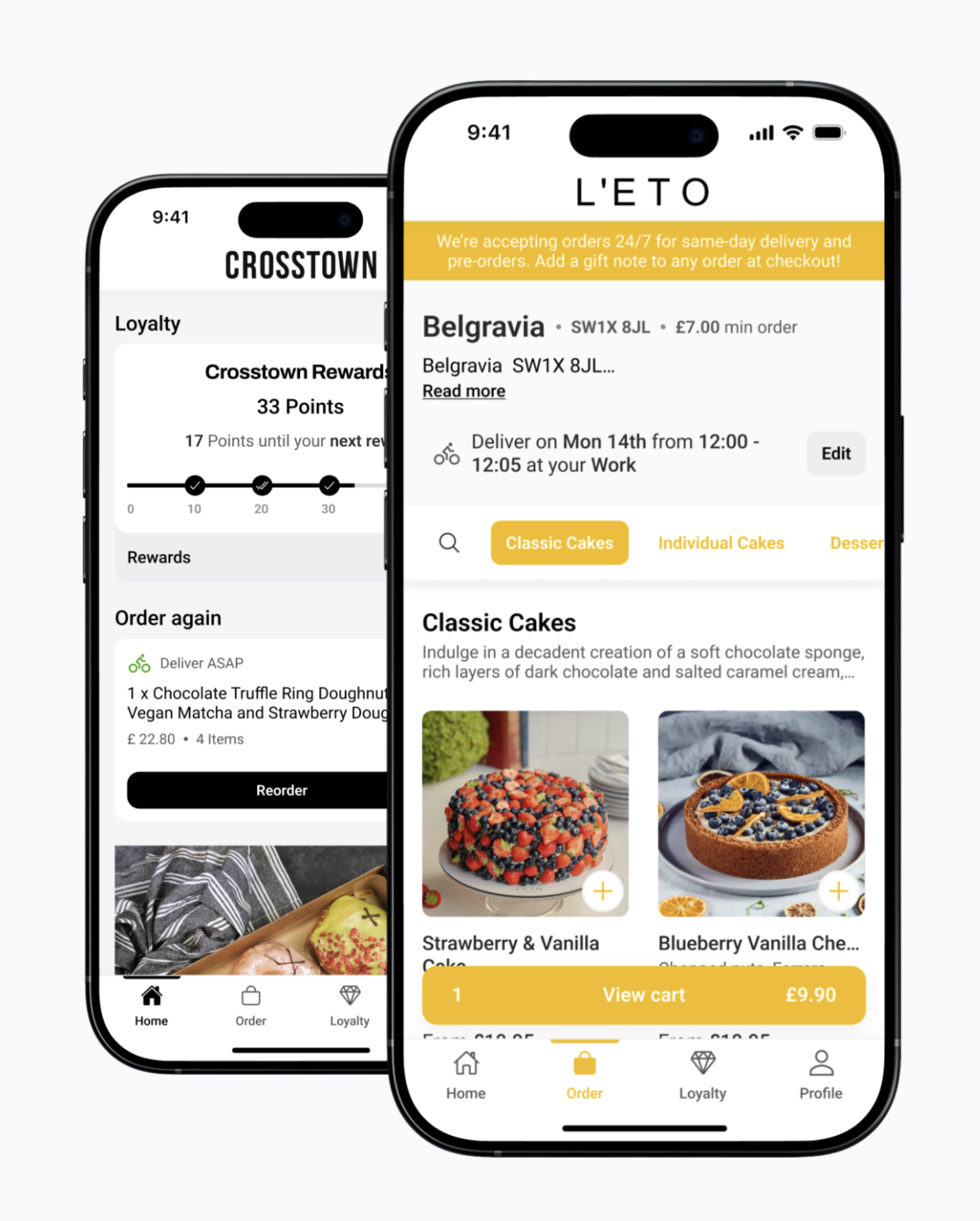
It all started with doughnuts.
I co-founded Crosstown with my business partner Adam back in 2013. We were always progressive as a business and became early adopters of different technologies. It’s hard to believe now, but taking card payments at a market stall was considered progressive back then.
Crosstown was also an early adopter of Deliveroo in 2014 and Uber Eats when they launched in the UK in 2016. Even early on, it was clear how impactful digital ordering and delivery would become for the sector.
As creators of a hospitality brand, we wanted control, diversification, and the ability to engage with customers on our own terms. We always saw direct ordering as a complementary channel, not either-or.
Back then, there were no dedicated e-commerce systems built for hospitality. Everything was built for retail and couldn’t handle the realities of running a restaurant or bakery: on-demand delivery, time-based menus, click and collect, pre-orders, and real fulfilment logic.
In 2015, we started building the first version of what is now Slerp.
I never intended to start a technology company. I just wanted to solve a real structural dependency that was unfolding in front of me. A lot has evolved since those early days, but the problem we were solving for Crosstown is the same one we’re solving now for other businesses, just at a different scale.
How do you think about balancing brand control, guest experience, and operational simplicity as brands scale?
There is always a tension between brand control, guest experience, and operational simplicity.
When you’re small and nimble, everything can pull in the same direction. When you start to scale, every new site, channel, person, or product adds complexity.
Our job, with partners like Stream, is to absorb the operational complexity underneath so the guest experience on top stays clean and on-brand.
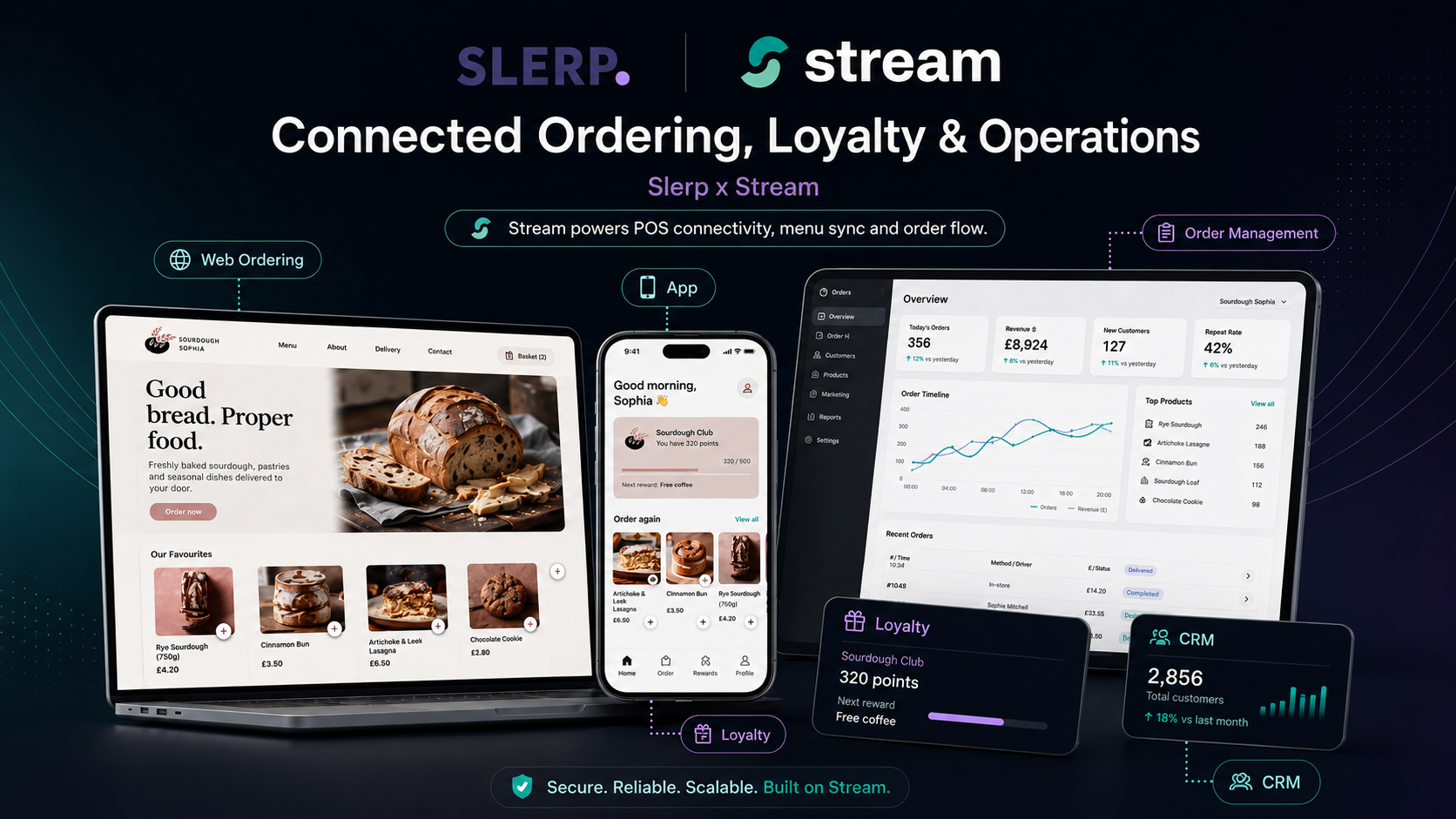
That is why we bundle ordering, delivery, loyalty, CRM, and the rest natively. The platform decision matters most when you’re at 1, 7, 17, or 70 sites, and the cracks in a fragmented stack start to show.
How does Slerp support growing brands as their needs become more complex?
I was lucky to be scaling Crosstown when we started building the first versions of Slerp. That meant I saw firsthand what a growing hospitality business needed, and which requirements were fundamental to accommodate that growth.
We’ve had a lot of brands transition to Slerp because they outgrew their first ordering solution.
There are plenty of simple solutions in the market, but Slerp is built for brands that are scaling, excited by innovation, want control and diversification, and are willing to adapt.
The same platform a single-site bakery uses is the same one a 50-site QSR uses. We’re proud to have enabled millions of orders, maintained a 90+ CSAT score, and built a solution that truly scales with our partners.
How has working with Stream strengthened your ability to support brands with reliable POS connectivity, menu syncing, and order flow?
POS connectivity is one of the hard parts of this category because there are so many POS systems.
Doing it well means real-time menu sync, reliable order injection, tracking, and clean handling of edge cases, with each POS having its own quirks.
We could spend the next five years building and maintaining those integrations ourselves, or we could partner with the team already focused on it.
Stream adds a POS connectivity layer for Toast, Square, Clover, Oracle Micros, Shift4, Zonal, and Comtrex. That gives Slerp partners a broad POS footprint without us losing focus on what makes Slerp distinctive: the direct ordering channel, native delivery, loyalty, CRM, and branded app.
The operators benefit because there is one less link in the chain and one less thing for them to think about.
Customer Spotlight: The Kati Roll Company
“Thanks to the integration between Stream and Slerp, our operations run smoother. It’s easy to make changes, update our menu, and publish across different channels, and our guests get a better experience.”
Dilip Patel
The Kati Roll Company

Where do you see the biggest opportunities for brand-owned ordering platforms like Slerp?
Establishing a direct ordering channel is becoming a hygiene factor in a restaurant’s tech stack.
For years, operators treated third-party marketplaces as the digital channel. But as digital has become a major component of revenue, operators now recognize the need for diversification.
It is not direct or marketplaces. It is both, working alongside each other.
The opportunity for Slerp is to be the infrastructure for that direct diversification shift, not just an ordering page. That means delivery, loyalty, CRM, app, and catering working as one system rather than five stitched together.
It also means partnering with best-in-class specialists for the parts of the stack that need additional expertise, like Stream on POS connectivity, rather than building a bloated all-in-one.
The future of brand-owned ordering is a connected stack of focused products.
---
About Stream
Stream helps restaurant brands and technology partners simplify integrations, synchronize menus and ordering systems, and reduce the operational friction that slows growth.
For operators, Stream helps menus, orders, and POS systems work together more reliably across channels.
For technology companies, Stream provides integration infrastructure, including white-label options for partners that want to own the brand and customer experience while avoiding the cost and complexity of building and maintaining every integration in-house.
As platforms like Slerp continue shaping the future of brand-owned ordering, Stream helps make the connected stack work.